Nanoverse
A new planetarium powered by our open source SSCore astronomy library.
The planetarium needs cross-origin isolation to run. Serve this site with Cross-Origin-Opener-Policy: same-origin and Cross-Origin-Embedder-Policy: require-corp headers, then reload.
The live Nanoverse web app is ready to explore. Tour the night sky from anywhere on Earth, in the Solar System, or far beyond. Drag to look around, scroll to zoom, and click an object to select it. This preview supports Safari, Chrome, and Edge; Firefox is not supported.
Open the Nanoverse web app in a full window. View the Online Help for getting started instructions and a detailed user guide.
The sky is yours to explore
Nanoverse shows the sky from your location and the current time when you first launch it. Travel to another place on Earth, orbit a planet or moon, or set a date thousands of years in the past or future.
Search for an object, select it in the sky, and open its information panel. Animate time forward or backward to see the sky change. Night Vision turns the display red when you want to preserve your dark adaptation.
Settings put the simulated view in your hands, including time, location, coordinates, and display options. Built-in Help explains the controls in detail.
Built on SSCore
Southern Stars' open source, high performance, C++ astronomy library powers the calculations behind the view.
Explore SSCore on GitHubA universe of objects
The web app includes about 130,000 stars, the Messier and Caldwell deep sky catalogs, the Sun, Moon, planets, and hundreds of moons.
Explore textured planets and moons, 3D models of Phobos, Deimos, Ceres, and Vesta, roughly 950 comets, and 6,500 asteroids. Its satellite catalog includes about 16,000 objects, including active satellites catalogued by CelesTrak.
Arcsecond accuracy makes Nanoverse useful for naked-eye and telescopic observing.
Native Apps Coming Soon
Desktop versions for Mac/Windows/Linux, and mobile apps for iOS/Android are on their way. They have the same user interface, and customizable "video game" look-and-feel, as the web app previewed here.
But the native apps will run offline, and expand the database to 2.87 million stars, the full NGC and IC catalogs, 4500 comets, 25K asteroids, and 36K satellites.
Native apps feature much higher resolution planetary maps and deep sky images. And they'll control Celestron, SkyWatcher, and Meade-compatible telescope mounts.
Nanoverse Feature Gallery
Below is a selection of screenshots from the Mac desktop version of Nanoverse. The web app can render these simulations at lower resolution and with fewer stars. You can explore it right here on this web page! Click a screenshot to see it at full resolution.
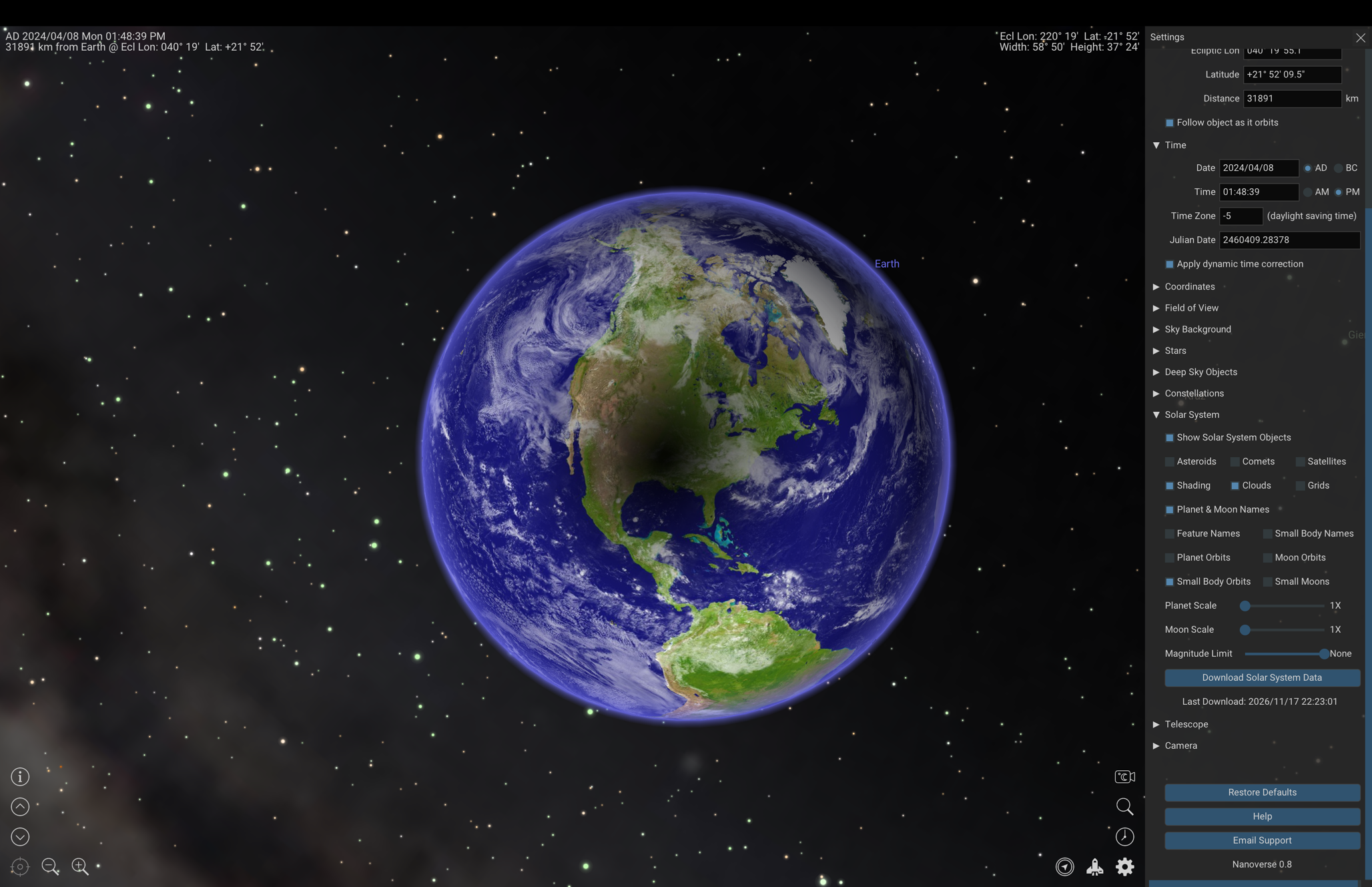 Solar eclipse from space
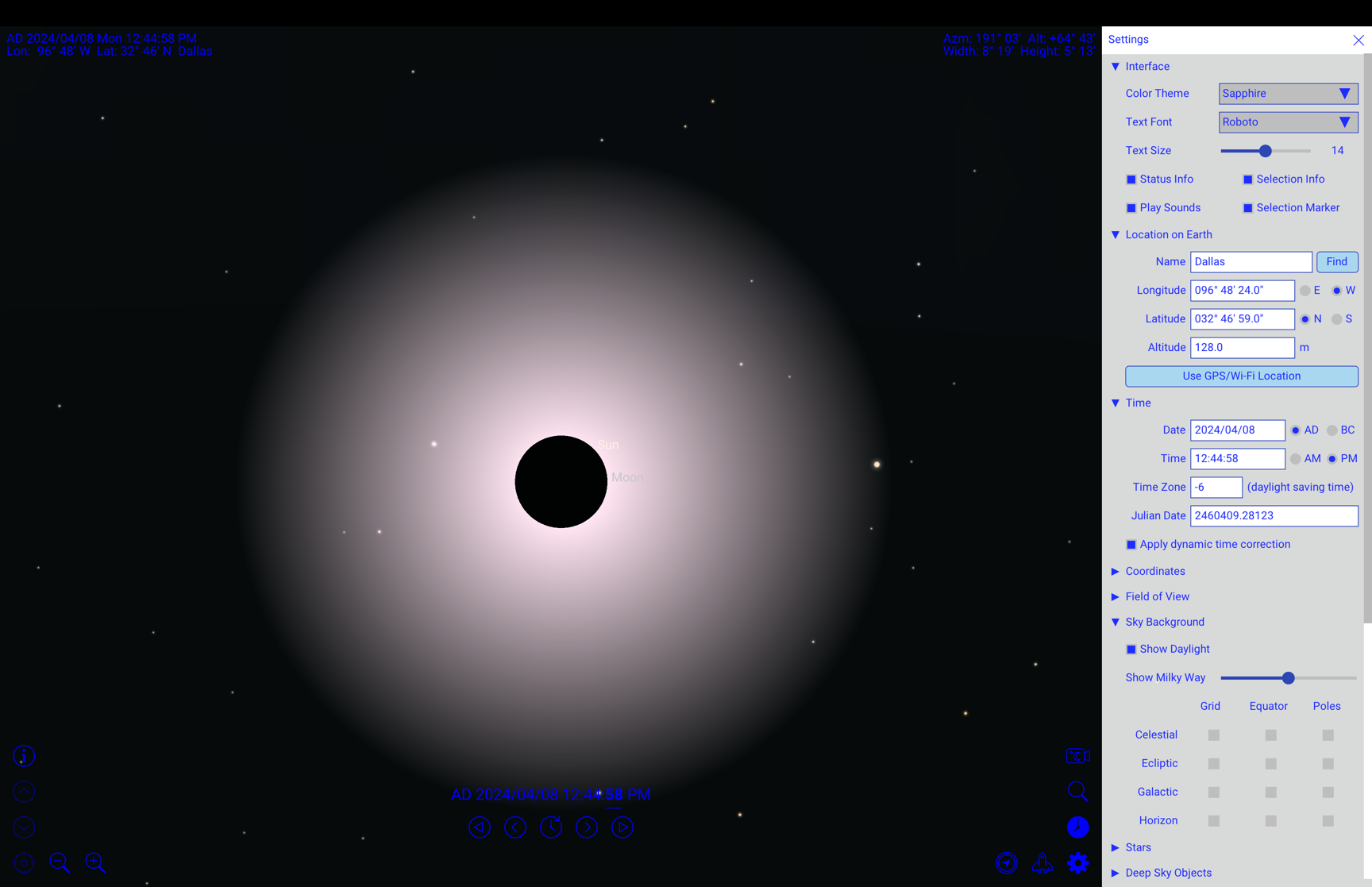 Solar eclipse
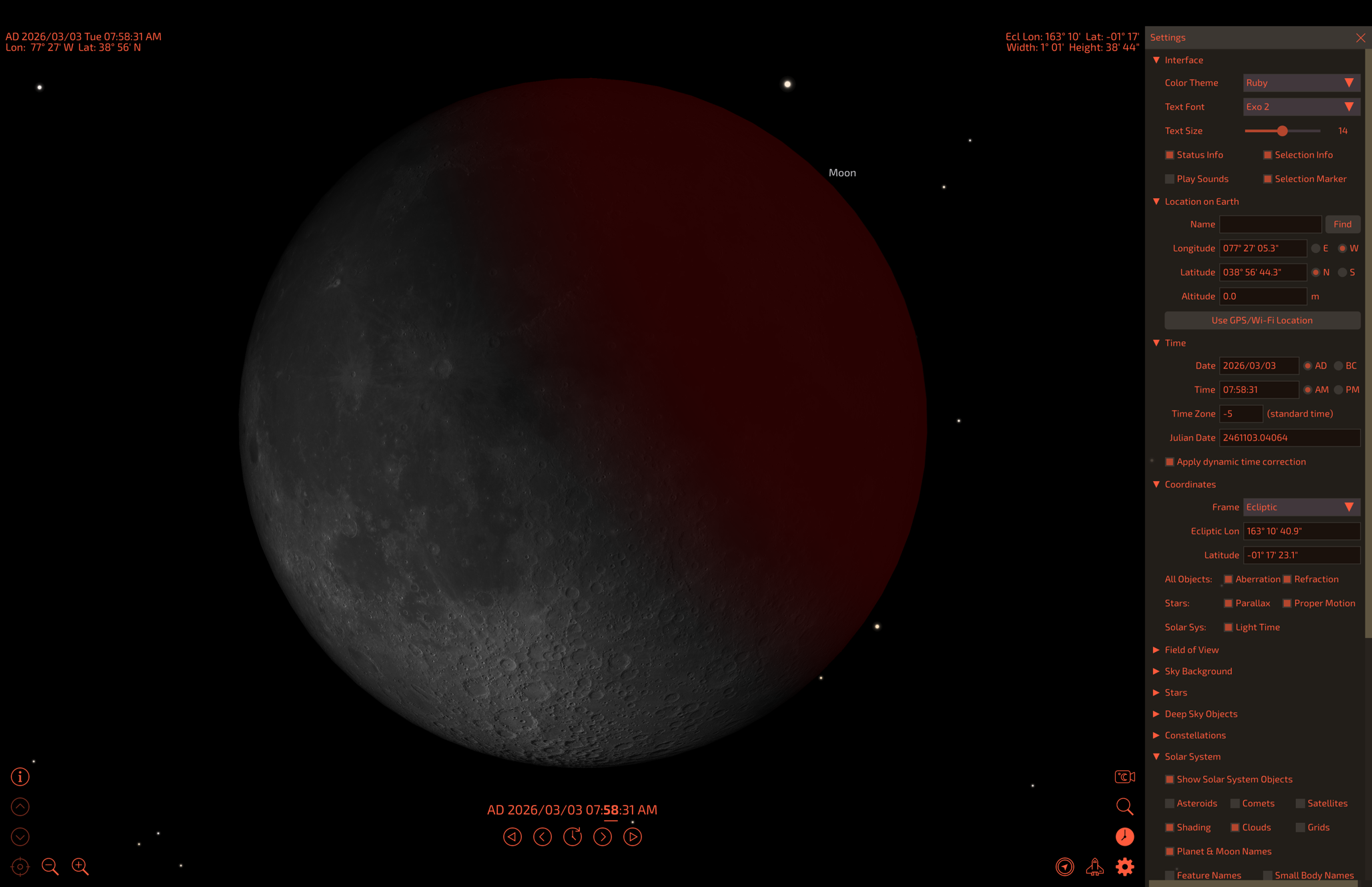 Lunar eclipse
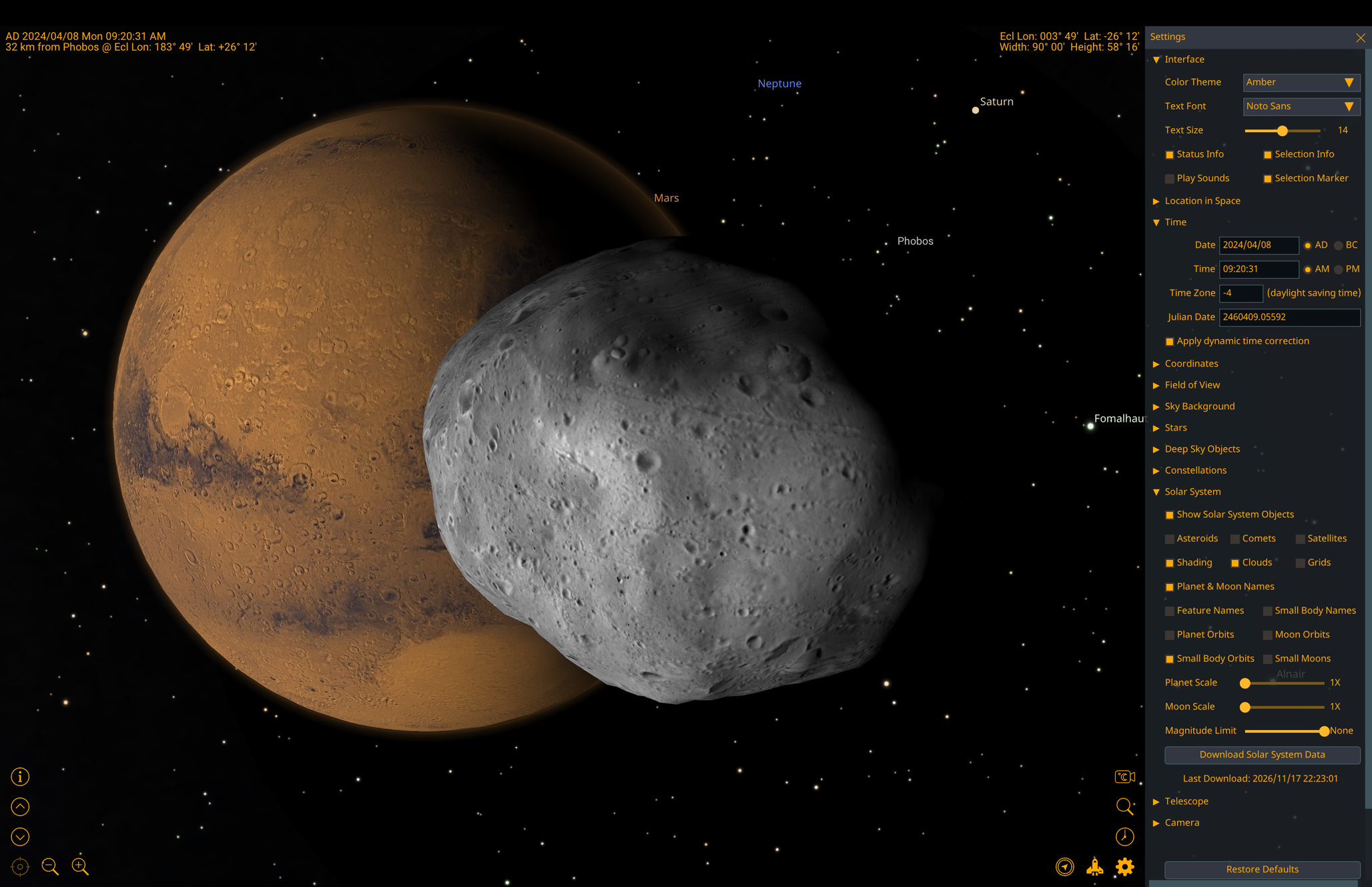 Mars and Phobos
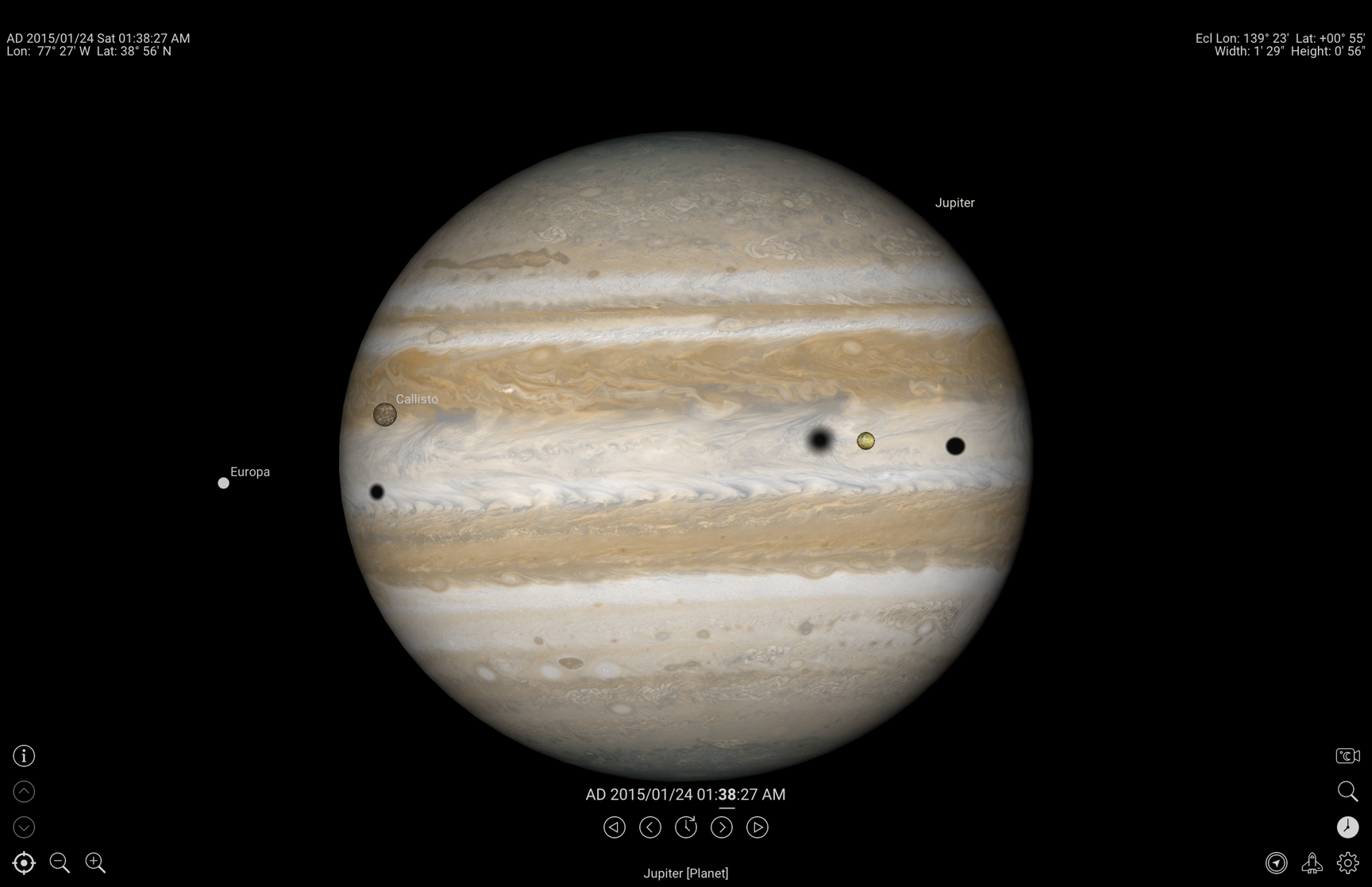 Jupiter triple shadow transit
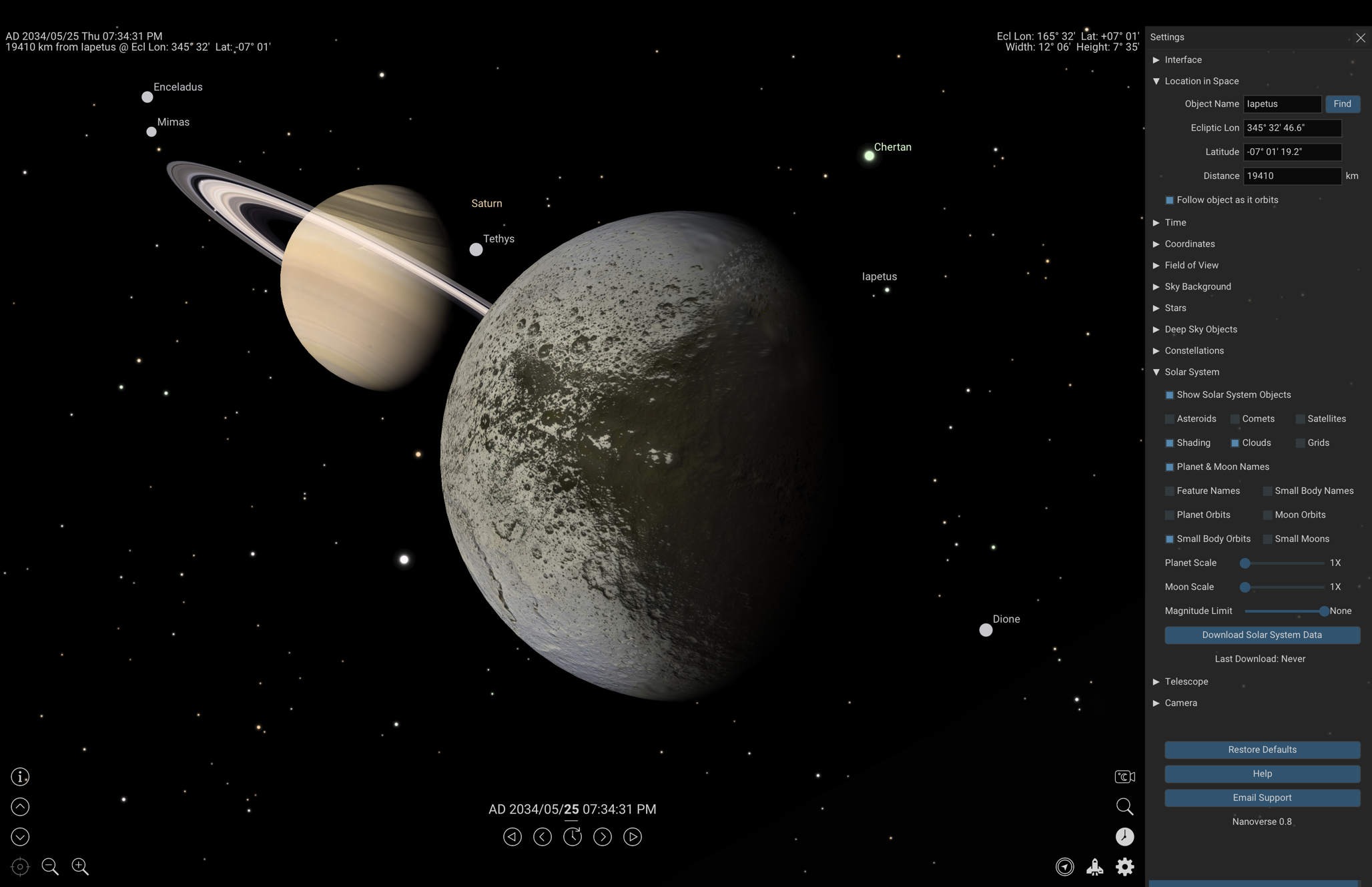 Saturn and Iapetus
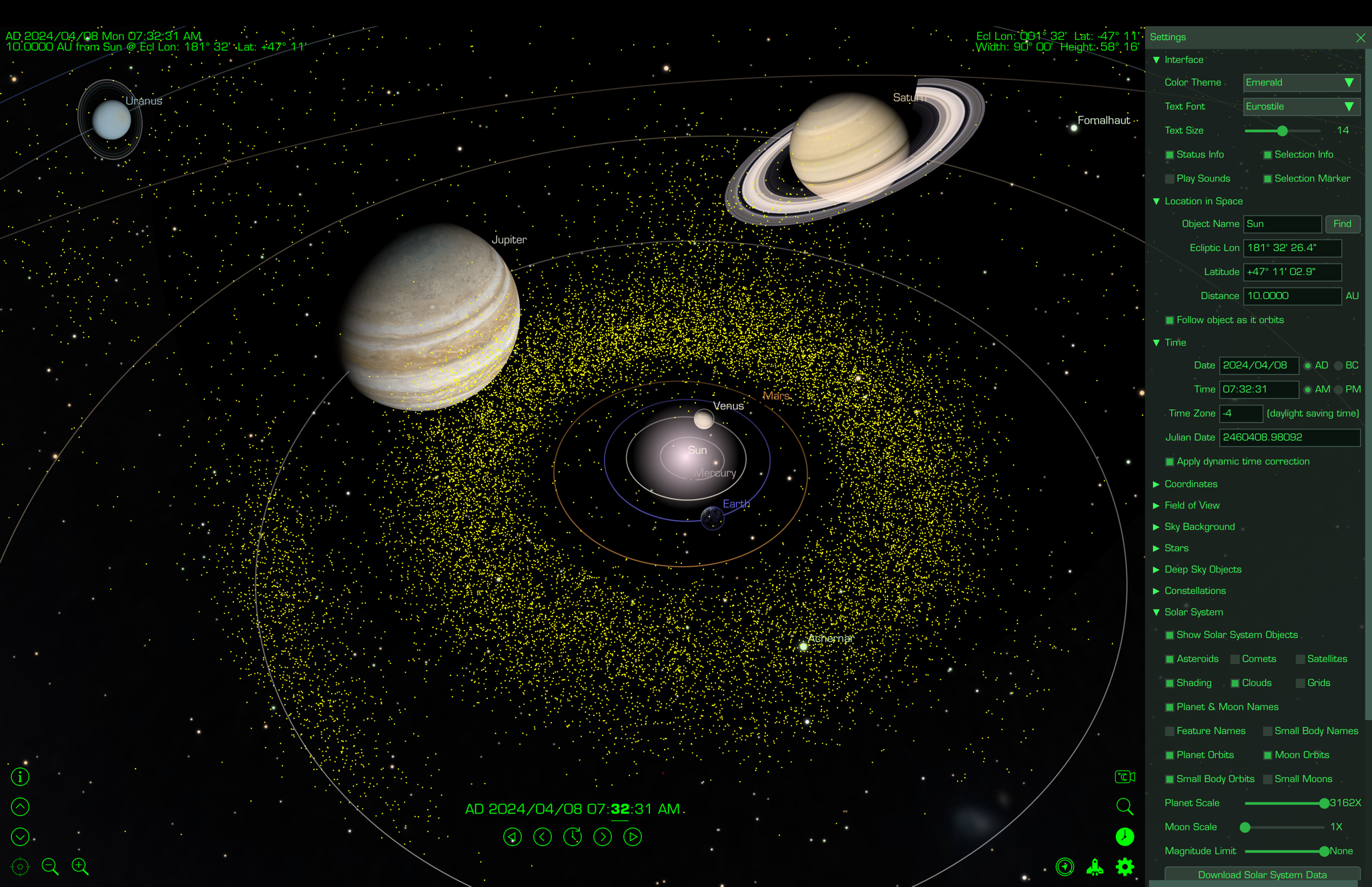 Solar System asteroids
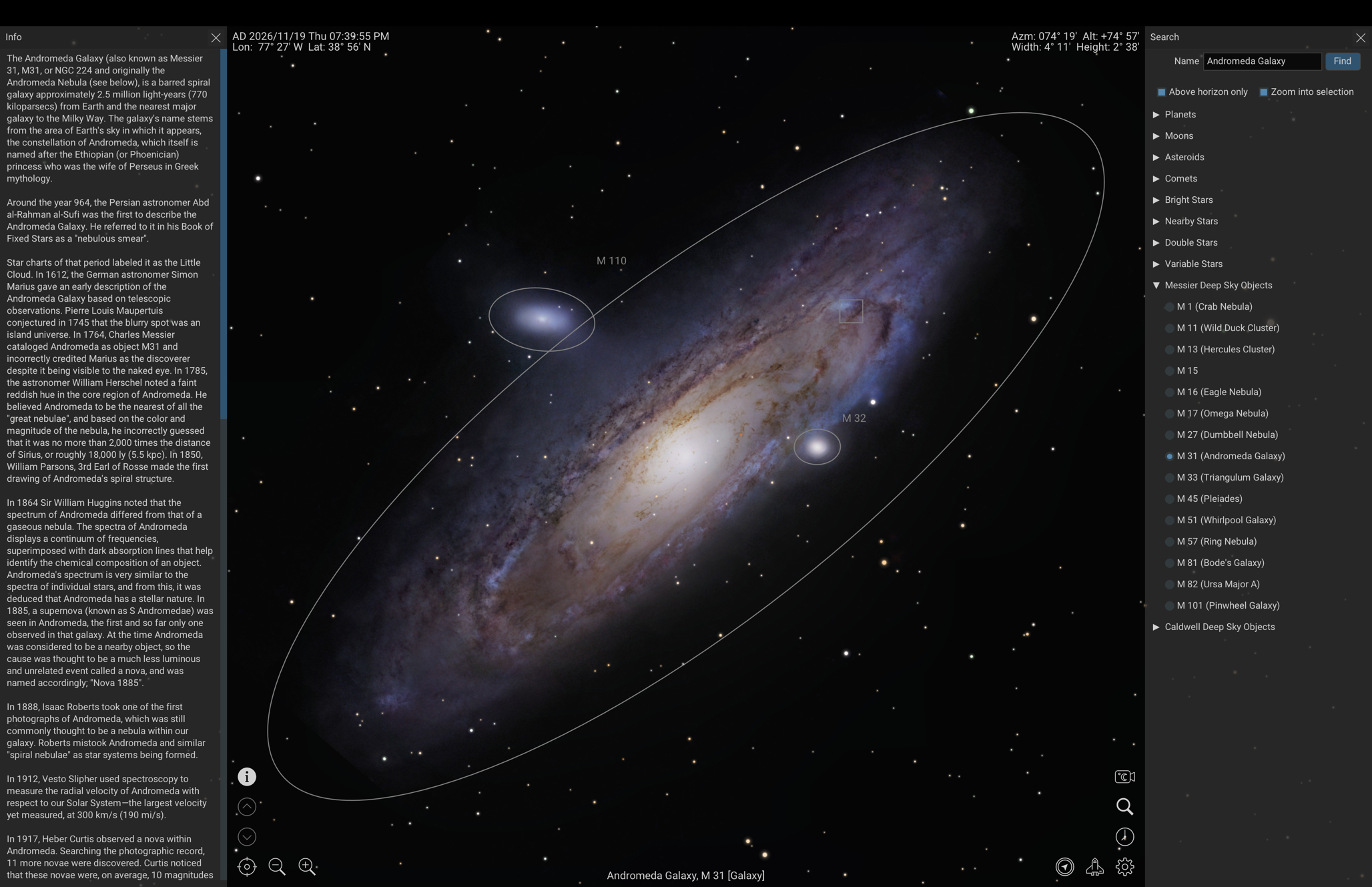 Andromeda Galaxy information
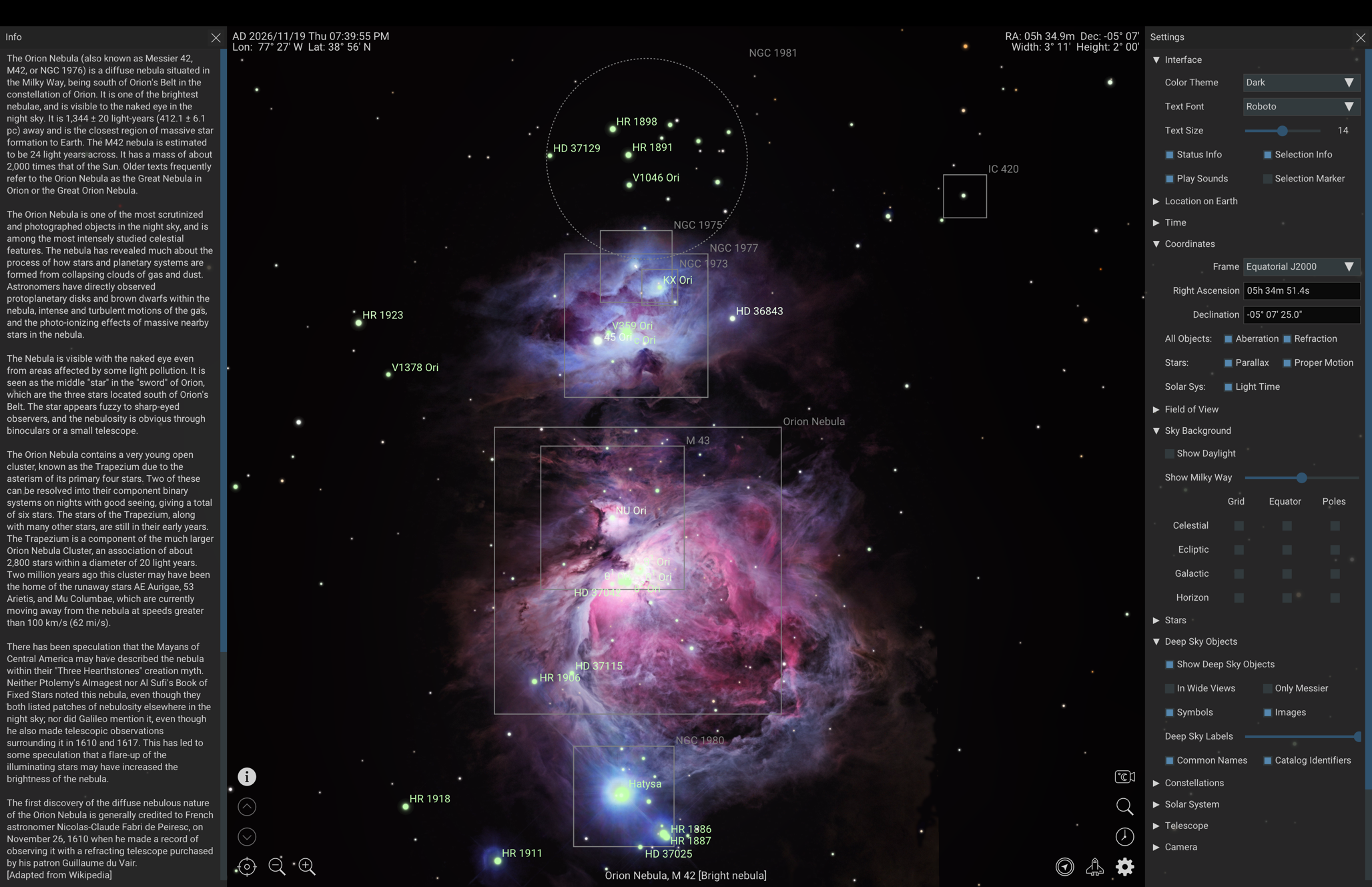 Orion Nebula information
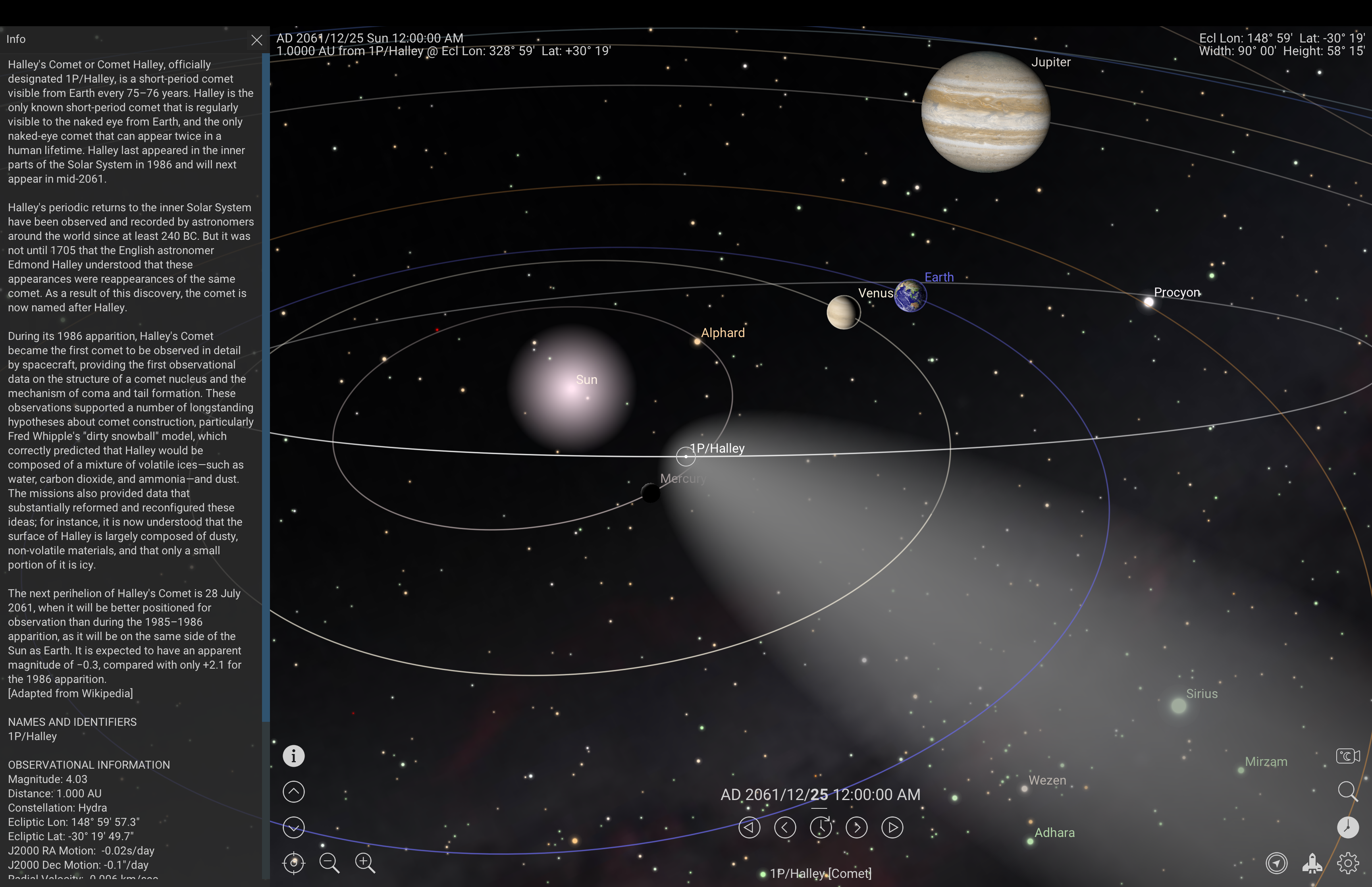 Comet Halley in 2061
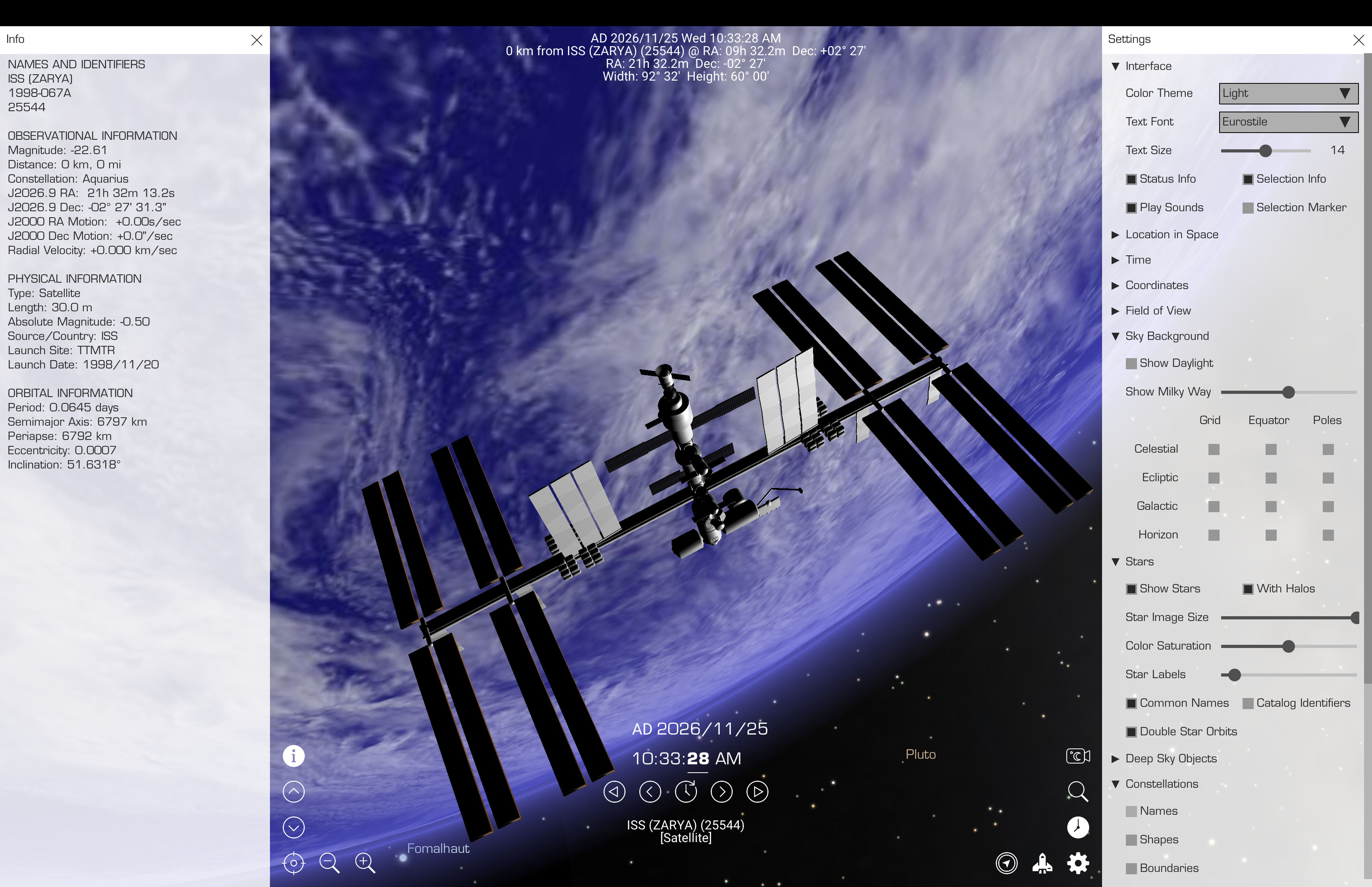 International Space Station
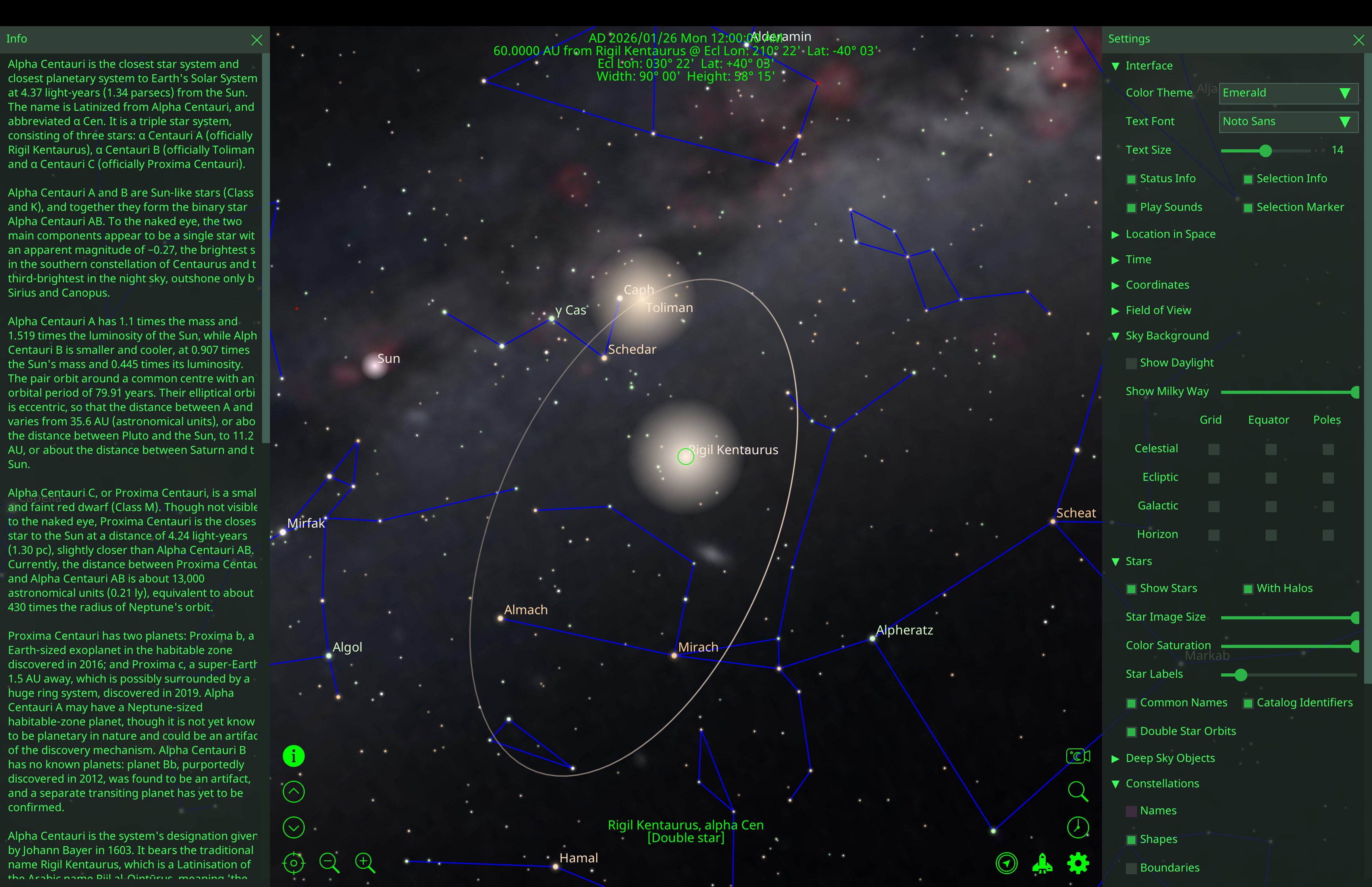 Sun from Alpha Centauri
Need help getting started? Read the Nanoverse Help guide, or send us feedback.